
What Is a Disciple of Jesus? Be. Become. Do.
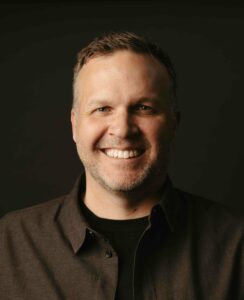
Pastor Keith Roberson started with a poll. Anyone in the room born in Franklin, Tennessee? A couple of young hands went up. Anyone born in Middle Tennessee at all? A few more. How many of you moved here from California? Most of the room.
The poll had a point. We tend to assume that a rock-solid foundation requires knowing where you’re going in life. But if we’re being completely honest, the where of your life will change all the time. Almost nobody in that room planned to be living in Middle Tennessee. And the what changes too: hardly anyone is doing at forty what they imagined at eighteen. The where shifts. The what shifts. Neither one can hold the weight of a foundation.
But who you follow, that can live forever.
In this message from the Foundations series, Pastor Keith walked through what it actually meant when Jesus looked at two fishermen named Simon and Andrew, working their regular everyday job, and said, “Follow me.” He was uprooting everything about their where and their what, and at the same moment handing them the one constant that would never move: the who.
What this sermon is about
This sermon answers two questions most Christians carry quietly. First: what is a disciple of Jesus, really? Not the church word, but the first-century reality behind it. Second: am I actually supposed to make disciples, even though I feel barely qualified to be one?
Keith’s answer comes in his most repeatable framework: Be. Become. Do. Be with your rabbi. Become like your rabbi. Do as your rabbi did. Identity first, then formation, then activity, in that order. And the news for everyone who feels unqualified is better than you’d think.
Anchor your life in the who, not the where or the what
The saying goes, show me your friends and I’ll show you who you are. Who you follow, who you put yourself around, who you’re after, is deeply defining. Your very foundation, Keith said, will be crafted by the who around you.
That’s why the call of Jesus is both terrifying and safe at the same time. When Jesus called Simon and Andrew, the where and the what of their lives were about to go crazy. Nothing would ever be the same. And yet he was inviting them to plant their feet in something rock solid that cannot be moved in the storm.
“The where changes, the what changes. All of these things are moving and shifting constantly in our lives. But who you follow, that can live forever.” — Pastor Keith Roberson
When you and I say yes to being a disciple of Jesus, it’s a whole-life reality. The what becomes way less important, the where becomes way less important, and the who becomes the center. He’s who we’re reaching for.
What a disciple actually was: be with, become like, do as
To get the room’s mind around what Jesus was really asking, Keith read from Practicing the Way, the discipleship tool New River uses in its groups, describing education in first-century Israel. Jewish kids started around age five at the bet sefer, the house of the book, and by twelve or thirteen most had memorized the entire Torah. The best of the best went on to the bet midrash, the house of learning, and by seventeen had memorized the entire Old Testament. And the best of the best of the best went on to apprentice under a rabbi.
The Hebrew word for that apprentice is talmid, usually translated “disciple,” though a growing number of scholars say the best English word is “apprentice.” Because ancient education wasn’t informational, it was formational. The goal wasn’t to learn about something but to become someone. And an apprentice’s entire life was organized around three driving goals: to be with your rabbi, walking behind him on the road, eating every meal with him; to become like your rabbi, imitating his whole life, copying his mannerisms; and to do as your rabbi did, until the day he turned to you and said, go and make disciples.
That was what it meant to be a disciple, Keith said, and it is still what it means to be a disciple. And here’s what made Jesus’ invitation unheard of: instead of taking the elite who had survived years of training, he looked at really ordinary people, just like us, and in one fell swoop said, leave, trust me, and follow me.
“To follow me means to be with me, and to become like me, and to do the things that I do. That is at the heart of what it means to be a follower of Jesus.” — Pastor Keith Roberson
You’re not just a disciple. You’re called to make disciples.
Then Keith took the room to the text that turns every follower into a sender. After pouring himself into twelve men, Jesus gives them, and us, a life-defining mission:
Matthew 28:18-20 — “All authority in heaven and on earth has been given to me. Go therefore and make disciples of all nations, baptizing them in the name of the Father and of the Son and of the Holy Spirit, teaching them to observe all that I have commanded you. And behold, I am with you always, to the end of the age.”
If you’re a follower of Jesus, Keith said, you are a disciple, but you are also being called to be a disciple maker. It’s part and parcel of the whole thing. And if that feels daunting, if you’re sitting there thinking “I feel like I’m barely making it as a disciple,” welcome to the club. That’s exactly where the disciples themselves were. Which is why Jesus added a promise:
Acts 1:8 — “But you will receive power when the Holy Spirit has come upon you, and you will be my witnesses in Jerusalem and in all Judea and Samaria, and to the end of the earth.”
In other words, it has very little to do with you and very much to do with the One who inhabits you, fills you, and goes before you.
Keith named the real reason we shrink back from this call, and it involved a movie from “candidly, an incredible decade”: The Karate Kid. We think disciple makers have to be Mr. Miyagi, an old wise master with all the secrets of life and the exact right words every time someone does something stupid. So we disqualify ourselves while we wait to become him. But Jesus changed the world with twelve normal, regular, average, kind of messy, unqualified men. Among his followers: a woman who had been oppressed by demons, a tax collector who was a traitor to his nation, and a whole crew that fled and hid on the night he was arrested. These were just messy, regular people being asked to trust and follow him.
What making disciples is, and what it is not
So what does disciple making look like for regular folks who are not quite at Mr. Miyagi status yet? Keith put it in the simplest terms he could: we regularly seek to build relationships for the purpose of becoming more like Jesus and helping other people become more like Jesus. That’s it. That’s why you’re on this earth.
He then cleared away three myths. Disciple making is not a program to master; there’s no sales pitch, no “for just $39.99 you too can be like this.” It’s opening the word of God with people, learning it, forgetting it, learning it again, and testifying over coffee to what the King is doing in you. It is not about becoming Yoda (or Mr. Miyagi, or Mr. Darcy, whatever character you like); Jesus picked the uneducated and the regular. And it is not about having all the answers. In fact, Keith offered the most God-honoring answer available when someone asks you a deep theological question you can’t handle: “I don’t know. But we can explore together.” To a world used to religious people with heavy finger-pointing and dogma, that honesty is refreshing. There’s one Messiah. You’re not it. I’m not it.
In place of the myths, three truths. Making disciples is about yielding to the Spirit of the living God, holding your hands out in the morning and asking, “God, what would you have of me today?” It is about choosing to honor and prefer those around you, because Jesus said in John 13:34-35, “A new commandment I give to you, that you love one another: just as I have loved you… By this all people will know that you are my disciples.” And it is about helping each other obey, not to earn God’s love, but because we already have it.
“You don’t have to save anyone. Good news: you can’t. You don’t have to convert anyone. Jesus didn’t say go to all the nations and convert all the peoples. No. Invite them into relationship.” — Pastor Keith Roberson
And the pace of all of it? Keith had the whole room say it out loud with him: little by little, day by day. Everything you want to see changed in this world, politics, the arts, education, race relations, all of it, will be healed and touched little by little, day by day, as the people of God turn their hands over to this rabbi and say, what would you have me do today? Not because pastors preach from big stages, but because that’s how Jesus changed the world the first time.
“Disciples are the ones who obey because we already have been radically loved. We’re not trying to win points with God.” — Pastor Keith Roberson
The morning closed with open hands, literally. Keith invited the room into a posture of yielding, and reminded anyone who isn’t yet a follower of Jesus that the exchange is on the table right now: hand him every broken thing, your sin and shame and guilt and fears, and he gives back beauty, glory, righteousness, purity, and holiness.
What this means for your week in Franklin
If you take this sermon seriously, four things change about this week.
- Pray the apprentice’s prayer each morning. Not “God, fix my decade,” just “Rabbi, what would you have me do today?” Jesus said tomorrow has enough mess of its own. Little by little, day by day is the actual pace of world change.
- Pick one relationship to build on purpose. Not a program, not a Bible study you have to launch. One coworker, neighbor, or friend you’ll intentionally walk with, for the purpose of becoming more like Jesus together.
- Practice saying “I don’t know.” When the hard question comes this week, resist the urge to perform. “I don’t know, but let’s look at it together” honors God more than a bluffed answer, and it disarms people who expect finger-pointing.
- Retire the Mr. Miyagi standard. Whatever you’ve decided disqualifies you, not enough years, not enough wisdom, not enough Bible, remember who Jesus actually picked. A yielded heart outranks a wise sage every time.
Watch the full message
The full sermon — “Be. Become. Do.” from the Foundations series — is in the video above. We post a new message every Sunday from New River Church in Franklin, TN. Browse our message library for more from the Foundations series and other recent teaching.
Coming Sunday at New River Church in Franklin, TN
If this message resonated and you’d like to experience worship and community in person, we’d love to have you with us. New River Church meets Sundays at 9:00 AM and 10:45 AM at 1153 Lewisburg Pike in Franklin, TN 37064 — just minutes from downtown Franklin and easy to reach from across Williamson County, Brentwood, and Spring Hill.
You don’t need to dress up. You don’t need a good voice. You don’t need to know much about church or the Bible to come. We’re a community of ordinary people walking through ordinary life, trying to do it together with Jesus at the center. Whether you’ve been a Christian for forty years or you’ve never set foot in a church, you are welcome here.
If you’re new to the area or new to faith, our First Time Guest page walks through everything you need to know before your first visit: parking, what to expect on Sunday morning, what your kids will experience in River Kids, and how to find us when you arrive.
If you’re looking for deeper community beyond Sunday morning, our Community Groups meet across Franklin and the surrounding area throughout the week. Groups are where Sunday morning faith becomes Tuesday afternoon real life.
Whatever you’re carrying right now, you don’t have to carry it alone. There’s a place for you at New River Church in Franklin, Tennessee. Come as you are.
Watch more sermons: newriverfranklin.com/messages Plan your visit: newriverfranklin.com/firsttimeguest Find a group: newriverfranklin.com/groups
📍 New River Church | 1153 Lewisburg Pike, Franklin, TN 37064 | Sundays 9:00 AM & 10:45 AM